
Hot water is one of those household essentials that rarely gets a second thought — until something goes wrong. The temperature setting on a water heater, however, deserves more attention than most homeowners give it.
Factory defaults are often left unchanged for years. In many cases, they’re set higher than necessary — not because anyone decided that was best, but simply because no one thought to question it. That oversight can quietly push up electricity bills and, more seriously, create scalding risks that are easy to prevent.
For anyone using a water heater in UAE, this isn’t just a comfort issue. The local climate, water quality, and energy costs all come into play when deciding where to set that thermostat. This becomes even more relevant when managing a water heater in the UAE, where environmental conditions directly affect performance.
The Recommended Starting Point: 49°C (120°F)
Most households do well at 49°C. It’s a setting that addresses two concerns simultaneously — safety and efficiency — without requiring much compromise on either front.
From a safety standpoint, exposure to water at this temperature takes several minutes to cause a serious burn. At 60°C, that same injury can happen in under six seconds. The gap between those two numbers matters enormously in homes where elderly people or young children are present. Reaction times are slower, skin is more sensitive, and accidents happen faster than anyone expects.
On the energy side, dropping from 60°C to 49°C can reduce water heating costs by around 10% annually. The system doesn’t work as hard, heat loss from the tank is lower, and reheating cycles happen less frequently. For most daily tasks — showers, dishwashing, laundry — 49°C delivers more than enough hot water.
When 60°C Makes Sense
There are genuine reasons to store water at higher temperatures. Legionella bacteria, for instance, can survive and multiply in water held between roughly 25°C and 50°C. In larger homes, shared accommodations, or facilities with high hot water demand, maintaining a 60°C storage temperature is a reasonable hygiene precaution.
The practical concern, of course, is the increased scalding risk at the tap. The solution used in many modern setups is a thermostatic mixing valve (TMV) — a device installed near the outlet that blends hot and cold water to bring the delivery temperature down to a safe level. This way, the tank stays hot enough to suppress bacterial growth, while the water reaching taps and showers is no longer a burn hazard.
It’s an approach worth knowing about, particularly when optimising a water heater in UAE for both safety and hygiene.
Scalding Burns Are More Common Than Expected
Hot water injuries are frequently underestimated, partly because they don’t always cause immediate pain. At 60°C, severe burns can develop in less than six seconds of contact. At 49°C, the exposure time needed for the same level of damage is significantly longer — long enough for most people to react and move away.
Older adults face a compounded risk. Thinner skin burns more easily, and slower reflex responses mean less time to avoid contact. This is precisely why water heater temperature is now treated as a safety specification, not just a comfort preference, in residential settings across the UAE.
The Link Between Temperature and Monthly Bills
Water heating accounts for a notable portion of household electricity use — often more than residents realise. The relationship between temperature and cost is fairly direct: higher storage temperatures mean more energy consumed to reach that temperature, more heat lost from the tank while it sits unused, and more frequent heating cycles to maintain the set level.
Reducing the thermostat by even 5–10°C can make a measurable difference. In the UAE, where cooling systems already drive significant electricity consumption, trimming unnecessary water heating load adds up over the course of a year. This is especially noticeable when operating a water heater in UAE, where energy usage is already high due to climate conditions.
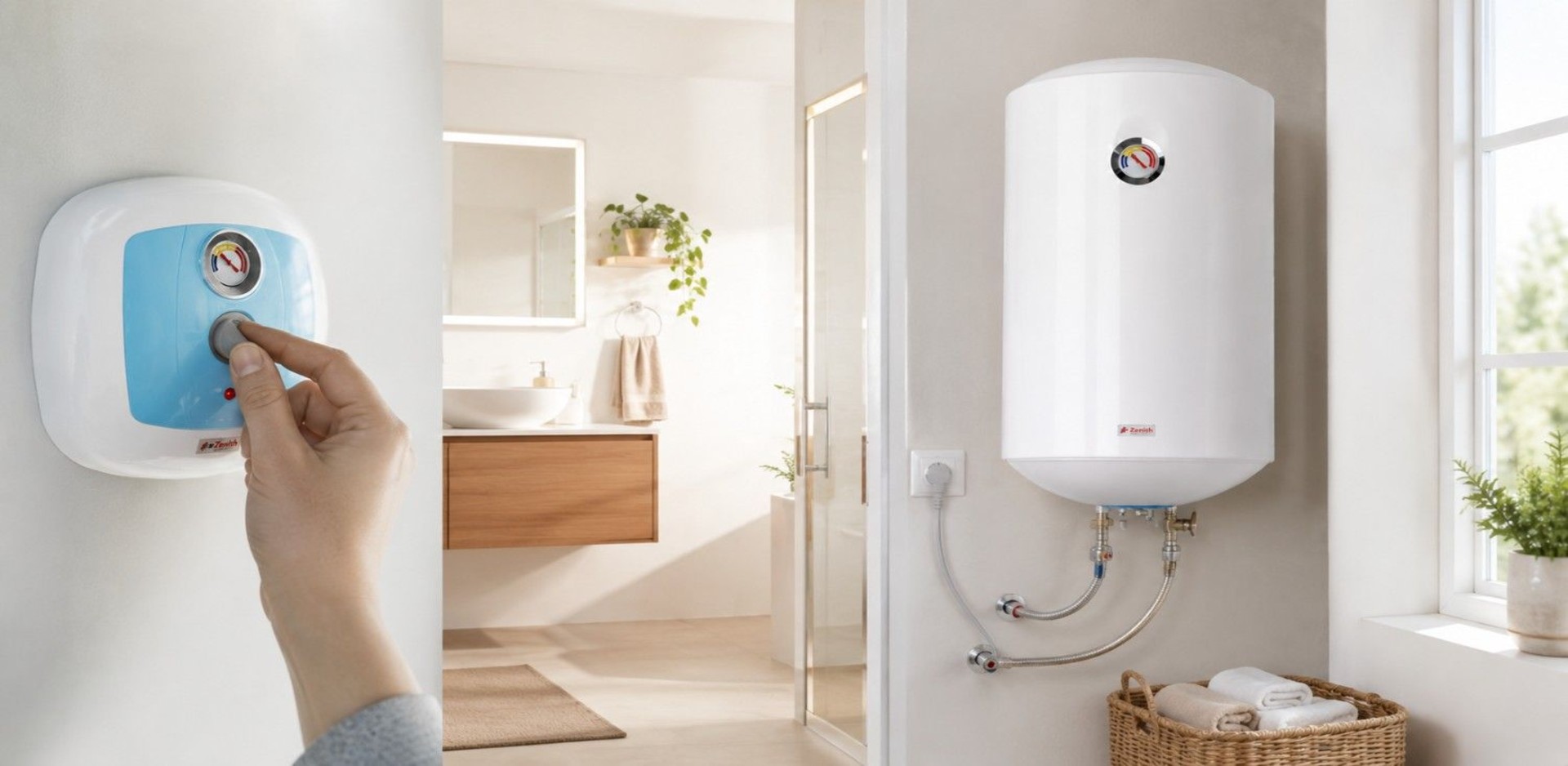
UAE-Specific Factors Worth Understanding
Temperature settings don’t behave the same here as they do in cooler climates, and the difference is worth factoring in.
Incoming mains water temperature fluctuates considerably between seasons. During summer, water entering the tank may already be around 30°C, meaning the heater has a much shorter distance to travel to reach the set temperature — less energy required, lower bills. In winter, that inlet temperature can drop to 15–20°C, and the same thermostat setting will demand noticeably more work from the heating element.
Adjusting the thermostat seasonally rather than leaving it fixed year-round is a simple habit that pays off. Running at 43–49°C through summer and stepping up to 50–55°C during cooler months accounts for these shifts without wasting energy.
Hard Water and Limescale: A Hidden Cost of High Temperatures
One factor that often gets overlooked in UAE homes is water mineral content. The water supply here tends to be high in calcium and magnesium, and these minerals behave differently at different temperatures.
When water is consistently heated above 60°C, mineral deposits settle and accumulate faster on heating elements and tank interiors. Limescale buildup acts as insulation around heating elements — meaning they have to work harder to transfer heat, efficiency drops, and wear accelerates. Tanks running at lower temperatures accumulate scale more slowly and generally require less maintenance over time.
This is another important consideration when maintaining a water heater in UAE, where mineral content is naturally higher.
A Practical Temperature Strategy
Rather than picking one number and forgetting it, a seasonal approach tends to work better:
- Summer months: 43–49°C
- Winter months: 50–55°C
- Hygiene cycles: occasional increase to 60°C
This kind of flexible management avoids unnecessary energy use while maintaining system hygiene.
Practical Maintenance Steps
A few habits improve both safety and longevity:
- Set the thermostat around 49°C for everyday use
- Install a thermostatic mixing valve if higher storage temperatures are required
- Avoid maximum settings unless necessary
- Recheck temperature settings after maintenance work
- Flush the tank periodically to remove sediment
These simple steps help maintain efficiency and prevent long-term issues.
Final Thoughts
Temperature control affects more than comfort. It influences energy consumption, internal wear, mineral buildup, and overall system lifespan.
A properly managed water heater in UAE operates more efficiently, lasts longer, and reduces running costs without requiring major changes in daily usage. Small adjustments, when maintained consistently, deliver noticeable long-term benefits.