Water Heating
What Causes Water Heaters to Use More Electricity Over the Years
Sediment buildup, aging heating elements, and poor maintenance can increase electricity use in water heaters over time.
Published · Updated
Article overview
Many homeowners notice something unusual after a few years of using the same water heater: electricity bills slowly begin increasing even though daily usage habits remain almost unchanged.
At first, the rise seems minor. The heater still works, hot water still comes, and nothing appears seriously wrong. But underneath the surface, the system is often losing efficiency little by little every year.
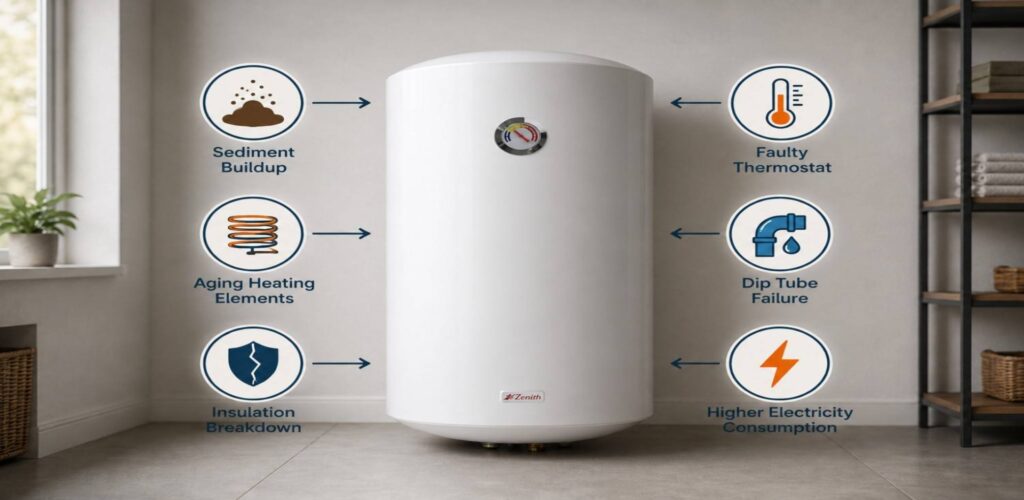
Sediment Buildup: The Most Common Efficiency Killer
One of the biggest reasons water heaters consume more electricity over time is sediment buildup inside the tank.
In areas with mineral-rich water, calcium and magnesium gradually settle at the bottom of the heater. Over time, this turns into a hardened layer of limescale.
- Heating cycles become longer
- More electricity is consumed
- Recovery time slows down
- Heating elements operate under higher stress
- Internal temperatures rise beyond normal levels
Ageing Heating Elements Lose Efficiency
Heating elements naturally wear down over time.
Continuous exposure to minerals, heat, and water gradually affects their ability to transfer heat efficiently. Corrosion, scaling, and surface degradation reduce performance year after year.
- The element stays active longer
- More electricity is required to reach the target temperature
- Heating becomes inconsistent
- Energy consumption increases gradually
Insulation Breakdown Increases Standby Heat Loss
Water heaters constantly lose some heat while storing hot water. This is called standby heat loss.
Modern units reduce this using high-density insulation around the tank. But over the years, insulation materials can deteriorate, settle, or lose effectiveness.
- Heat escapes faster
- Water cools more quickly
- The heater cycles on more frequently
- Electricity usage increases even without additional water consumption
Faulty Thermostats Can Quietly Waste Power
A malfunctioning thermostat does not always stop the heater from working. Sometimes it does the opposite—it keeps heating longer than necessary.
Over time, thermostat calibration can drift due to wear, mineral exposure, or electrical ageing.
- Overheating water unnecessarily
- Frequent reheating cycles
- Temperature inconsistency
- Higher standby heat loss
- Increased electricity consumption
The Dip Tube Problem Most Homeowners Never Notice
Inside storage water heaters, a component called the dip tube directs incoming cold water toward the bottom of the tank.
This helps maintain temperature layering:
- hot water stays at the top
- Cold water remains at the bottom until heated
- lukewarm showers
- unstable temperatures
- more reheating cycles
- higher energy usage
Why Electricity Usage Often Rises Faster in the UAE
Several regional conditions make efficiency decline more aggressive in the UAE compared to many other regions.
1. Desalinated Water & Faster Scaling
Although desalinated water is treated, it still contributes to mineral buildup when heated repeatedly.
At higher operating temperatures common in UAE households, limescale forms faster inside tanks and around heating elements.
2. High Ambient Heat Creates Thermal Stress
Many systems in villas and buildings operate inside:
Constant exposure to external heat increases stress on:
- rooftop spaces
- outdoor service areas
- poorly ventilated utility cabinets
- insulation
- tank linings
- seals
- heating systems
3. Seasonal Shut-Off Habits
Some residents switch off heaters completely during peak summer because incoming water already feels warm.
The problem is what happens during months of stagnation.
- sludge formation
- biological buildup
- faster anode rod depletion
- sediment hardening
Small Leaks Can Quietly Increase Electricity Bills
Pressure relief valves or internal fittings may allow small amounts of hot water to escape continuously without obvious signs.
In apartment buildings and high-rise systems, pressure fluctuations can make this issue worse.
- refill with cold water
- reheat repeatedly
- consume more electricity
How to Reduce Water Heater Electricity Consumption
Fortunately, many efficiency problems can be controlled before they become severe.
Flush the Tank Regularly
Annual or semi-annual flushing helps remove sediment before it hardens into thick limescale layers.
In harder water conditions, more frequent maintenance may be beneficial.
Inspect Heating Elements
Worn or heavily scaled elements should be inspected and replaced when necessary.
A clean, efficient element heats faster and consumes less electricity.
Lower the Temperature Setting
Many households use unnecessarily high settings.
Around 49°C–55°C is often sufficient for daily comfort while reducing:
- standby losses
- overheating
- mineral scaling
- energy waste
Improve Insulation
Adding insulation sleeves to exposed hot water pipes helps reduce heat loss between the heater and the tap.
Older tanks may also benefit from external insulation jackets where suitable.
Check for Valve Leaks
Small pressure-relief valve leaks often go unnoticed.
Checking for moisture, warmth, or dripping around discharge lines can help identify silent energy loss early.
Why Solar Water Heaters Are Becoming More Important in the UAE
As electricity costs and energy awareness continue increasing, many property owners are also exploring Solar Water Heaters as a long-term efficiency solution.
In the UAE’s climate, solar-based systems can significantly reduce dependence on electrical heating during large portions of the year.
- reduce electricity consumption
- lower long-term operating costs
- Reduce heating load on conventional systems
- improve sustainability performance
Final Thoughts
Water heaters rarely become inefficient overnight. In most cases, efficiency declines slowly through sediment buildup, ageing components, insulation loss, thermostat drift, and increased internal stress.
The challenge is that these problems often remain invisible until electricity bills rise noticeably or hot water performance starts changing.
Explore residential water heaters or ask Zenith for product and installation guidance.