

Water heaters are built with multiple safety systems, and actual explosions are rare. However, when they do occur, the consequences can be severe—structural damage, fire, serious injury, and long-term property loss.
In the UAE, certain local conditions make understanding water heater explosion warning signs even more important. Extreme summer heat, mineral-rich desalinated water, ceiling-mounted installations, and seasonal usage patterns all place unique stress on residential water heaters.
Recognizing early danger signals is not about fear—it’s about prevention.
What Causes a Water Heater Explosion?
At its core, a water heater explosion is almost always caused by excessive internal pressure.
When water heats, it expands. That expansion increases pressure inside the tank. Normally, this pressure is controlled by:
- A functioning thermostat
- A Temperature & Pressure (T&P) relief valve
- Proper expansion allowance
If one or more of these systems fail, pressure builds without escape. When pressure exceeds the tank’s structural limit, rupture can occur.
In the UAE, this risk is amplified by environmental and installation factors.
Why UAE Homes Face Unique Risks
1. Extreme Ambient Heat
In Dubai and across the Emirates, outdoor temperatures often exceed 45°C. Many water heaters are installed in:
- Balcony utility rooms
- Roof areas
- Poorly ventilated service spaces
- False ceilings
Unlike colder climates, where tanks only deal with internal heat, UAE heaters are exposed to both internal heating and high external temperatures.
This “heat on heat” effect increases baseline pressure—even when the heater is not actively heating.
Over time, safety valves and internal components degrade faster under these conditions.
2. Hard Water and Sediment Buildup
Desalinated water in the UAE often contains high mineral content. When heated:
- Calcium and magnesium settle at the bottom
- Sediment forms a hardened layer
- Heat becomes trapped beneath the scale
This leads to boiling pockets under sediment, creating loud popping or rumbling sounds. These are not harmless noises—they are internal pressure bursts.
Sediment causes:
- Overheating of heating elements
- Cracked internal lining
- Accelerated corrosion
- Increased pressure stress
One of the most overlooked water heater explosion warning signs in UAE homes is persistent rumbling or banging from inside the tank.
3. The Winter Restart Problem
Many residents turn off water heaters during the peak summer months. When winter arrives (November–March), heaters are suddenly switched back on.
After months of inactivity:
- Thermostats may stick
- Heating elements may overheat
- T&P valves may seize due to scale
- Sediment may shift suddenly
This is when many failures occur. Civil Defense records show that heater-related fire risks increase during early winter, not summer.
Critical Water Heater Explosion Warning Signs
These signs should never be ignored:
1. Leaking or Dripping T&P Valve
This safety component, the temperature & pressure relief valve, is extremely important.
If it:
- Drips continuously
- Releases water frequently
- Does not release water during testing
- Appears clogged or corroded
It may indicate excessive internal pressure.
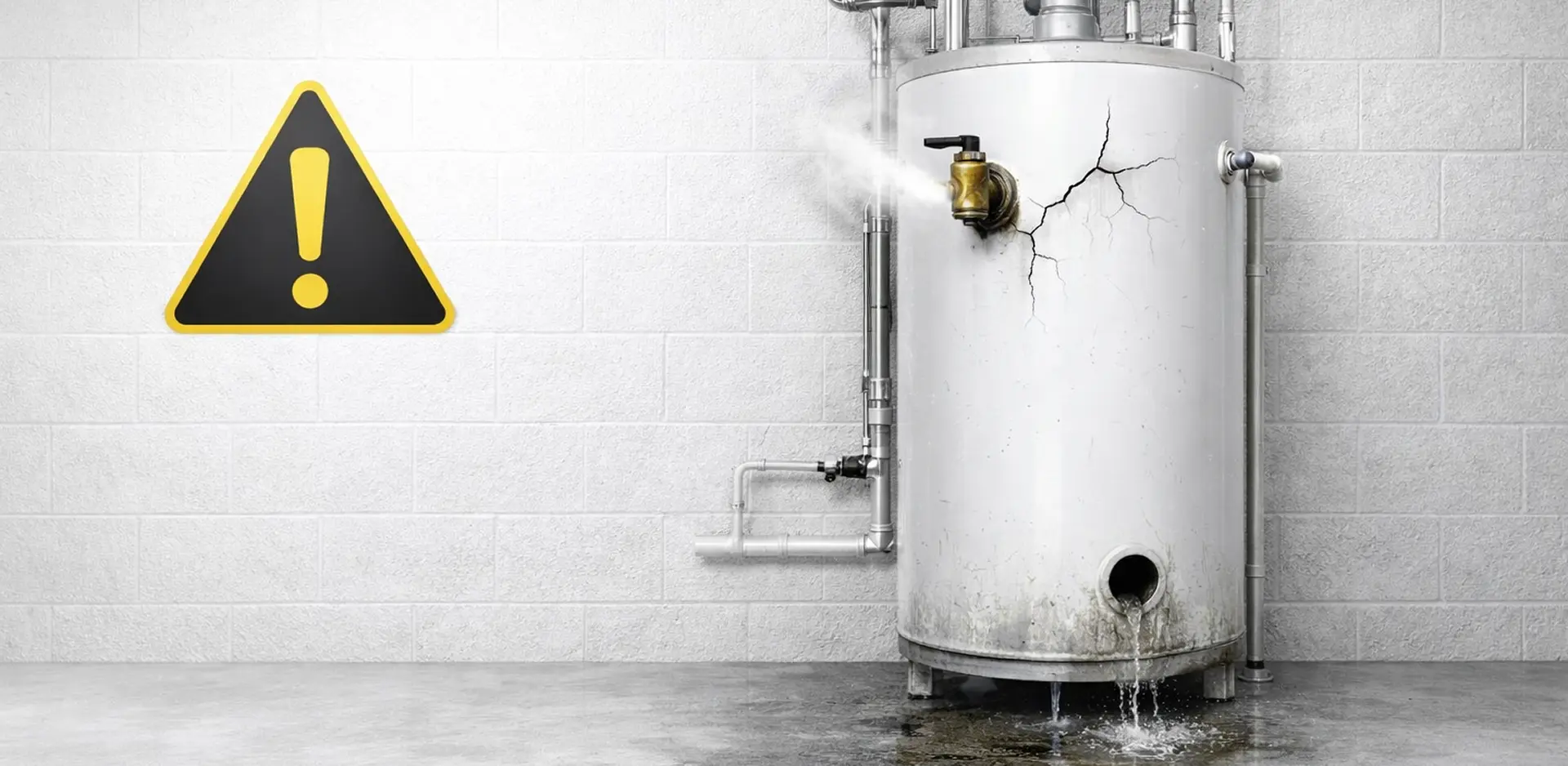
A blocked T&P valve is one of the most dangerous water heater explosion warning signs because it removes the tank’s primary pressure escape mechanism.
2. Loud Popping or Banging Sounds
Sediment-related boiling creates internal pressure spikes.
If the heater sounds like it is cracking, popping, or rumbling loudly, it is under stress.
These are warning signals—not normal operation.
3. Rotten Egg Smell Near Gas Heaters
A sulfur smell may indicate a gas leak. Gas accumulation in enclosed spaces can lead to ignition and blast risk.
Immediate action is required if this smell is detected.
4. Brown or Rusty Hot Water
Rusty water indicates internal corrosion. When the sacrificial anode rod fails, the tank begins rusting directly.
A weakened tank under high pressure is far more likely to rupture.
5. Shaking or Vibrating Tank
If the heater physically shakes or vibrates excessively, it may be experiencing internal pressure instability.
This requires urgent professional inspection.
Ceiling-Mounted Heaters: A Hidden Danger in Dubai
In many apartments and villas, heaters are installed above gypsum ceilings.
If pressure failure occurs:
- Water accumulates above ceiling boards.
- Ceiling panels weaken
- Collapse may occur suddenly
- Electrical systems may short-circuit.
- Neighboring units may be affected
Because damage remains hidden until visible staining appears, ceiling-mounted heaters require stricter monitoring.
Essential Safety & Maintenance Tips for UAE Homes
Preventive maintenance significantly reduces risk.
1. Test the T&P Valve Every 6 Months
Lift the lever carefully. Water should flow freely and stop when released.
Replace the valve every 3–5 years, especially in mineral-heavy areas.
2. Flush the Tank Twice a Year
In the UAE, annual flushing is often insufficient. Drain several liters every six months to reduce sediment buildup.
3. Inspect the Anode Rod Every 2 Years
Mineral-rich water dissolves anode rods faster in this region. Replacing them prevents internal corrosion.
4. Keep Thermostat at Safe Temperature
Set the heater around 60°C. Avoid exceeding 70°C, which increases pressure stress and scalding risk.
5. Ensure Proper Ventilation
Heater rooms should not trap excessive heat. Adequate airflow reduces external thermal stress.
6. Install Leak and Gas Sensors
Smart leak detectors inside ceiling trays can detect early drips. Gas and carbon monoxide detectors are strongly recommended for gas heaters.
Emergency Protocol: What To Do Immediately
If severe warning signs appear:
- Turn off power
- Shut off gas valve if applicable
- Close the cold water inlet
- Evacuate if gas smell is strong
- Contact a licensed technician immediately
Never attempt to repair a high-pressure system without professional tools and training.
Final Thoughts
Water heater explosions are rare—but they are preventable.
Understanding water heater explosion warning signs allows homeowners to act before pressure becomes dangerous. In the UAE, environmental stress, hard water, and seasonal usage patterns create additional risks that should not be ignored.
Routine maintenance, proper temperature control, and regular valve inspection dramatically reduce the chance of catastrophic failure. Choosing the best water heater suppliers in the UAE is not only about performance—it is also about safety standards, build quality, and reliability under local climate conditions.
A water heater should deliver comfort—not become a hidden hazard.
Early attention is always safer, simpler, and significantly less expensive than emergency damage control.