
Water heaters operate quietly in the background of everyday life, providing hot water for showers, kitchens, and cleaning. Because they work out of sight, problems inside the system often go unnoticed until performance begins to decline. One of the most common causes of long-term damage is limescale buildup.
In many Gulf countries, mineral deposits accumulate faster than expected due to water quality and climate conditions. For households and facilities using a water heater in UAE, this buildup can gradually reduce heating efficiency, increase electricity consumption, and shorten the life of the equipment. Understanding how limescale forms and how it can be controlled helps prevent these issues and keeps systems operating reliably.
What Limescale Is and Why It Forms
Limescale is a mineral residue mainly made of calcium and magnesium compounds found in hard water. When water is heated, these minerals separate from the liquid and attach themselves to hot internal surfaces such as heating elements, pipes, and tank walls.
At first the layer is thin and barely noticeable. With repeated heating cycles, however, the deposits harden and form a dense scale coating. This layer acts like insulation, slowing the transfer of heat from the element to the water.
In many buildings that rely on a water heater in the UAE, desalinated water still contains enough minerals to create this process. Over time, scale buildup becomes unavoidable unless preventive measures are taken.
Why Limescale Causes Serious Performance Problems
Limescale may appear harmless, but inside a water heater, it can affect several important functions.
Reduced Heating Efficiency
When scale forms around heating elements, heat cannot transfer efficiently into the water. Even a small layer—around 1.5 to 2 millimetres—can reduce heating efficiency by more than ten percent.
Higher Electricity Consumption
If the heater must operate longer to reach the same temperature, energy usage increases. This leads to noticeably higher electricity bills in homes where hot water is used frequently.
Heating Element Damage
Mineral deposits force heating elements to run at higher surface temperatures. Continuous overheating eventually weakens the element, leading to cracks or failure.
Structural Stress on the Tank
When scale traps heat against the tank lining, metal components expand and contract repeatedly. Over time this stress can create micro-fractures that eventually develop into leaks.
Why Limescale Builds Faster in the UAE
Several local conditions contribute to faster mineral accumulation.
Mineral Content in Desalinated Water
Although desalination removes salt, traces of calcium and magnesium remain. These minerals are enough to form deposits when water is heated repeatedly.
High Ambient Temperatures
Outdoor temperatures in the UAE frequently exceed 45°C during summer. Water heaters installed in service rooms, rooftops, or ceiling spaces experience additional heat stress that accelerates scale formation.
Ceiling-Mounted Installations
In many apartments, the heater sits above a false ceiling. A leak caused by scale damage may remain hidden until ceiling boards weaken or stains appear.
Because of these conditions, maintenance for a water heater in UAE generally needs to be more frequent than in cooler regions.
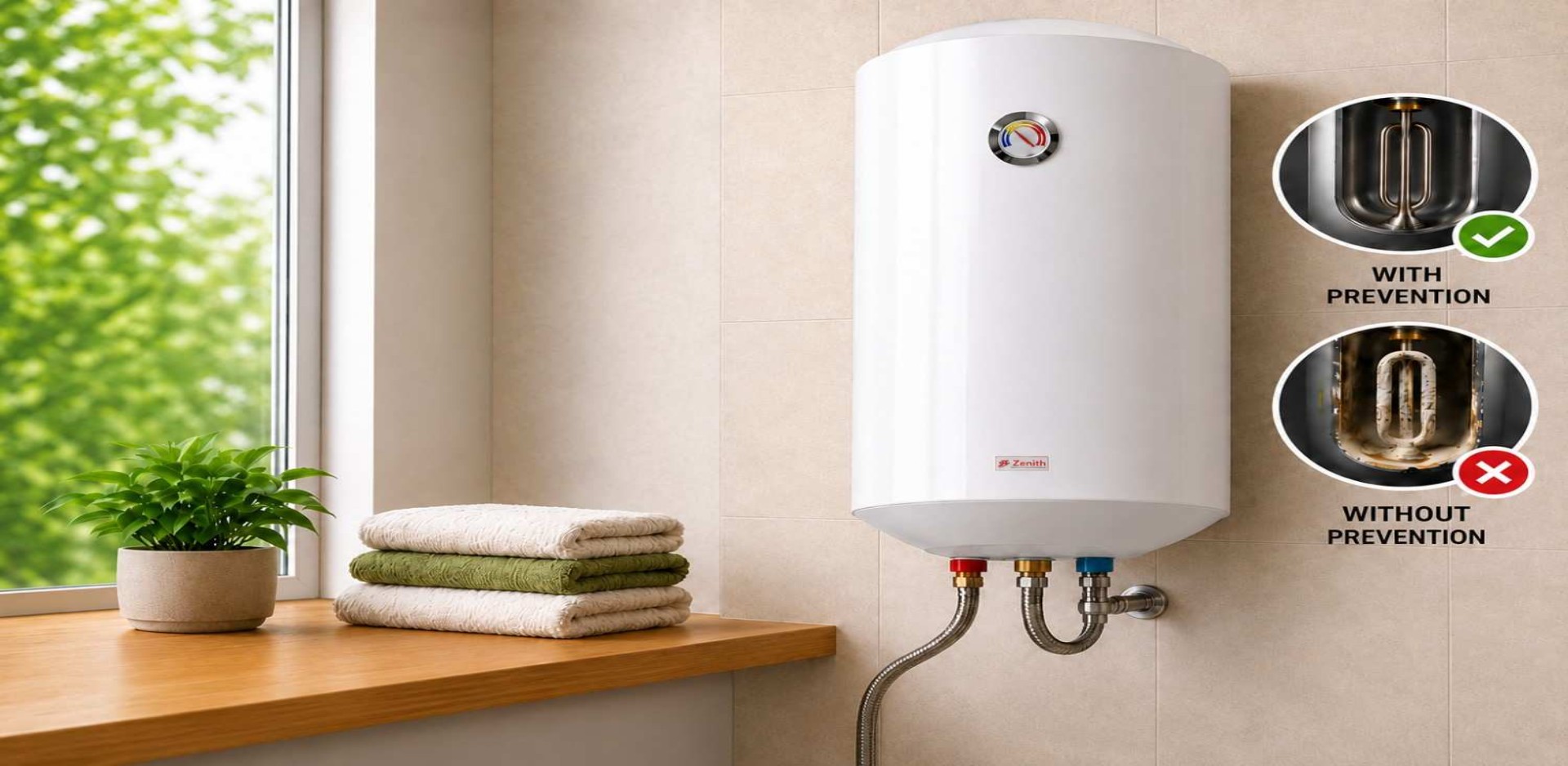
Practical Ways to Prevent Limescale Damage
Preventing scale buildup involves both proper equipment and regular maintenance practices.
Install Water Softening Systems
Water softeners reduce mineral concentration before the water reaches the heater.
Common options include:
- Ion-exchange softeners that replace calcium and magnesium with sodium ions
- Salt-free conditioners that prevent minerals from bonding to surfaces
- Inline scale filters installed on the incoming water line
These systems help reduce mineral deposits inside the tank and heating elements.
Flush the Tank Regularly
Sediment often settles at the bottom of a tank before it hardens into scale. Periodically draining several liters of water removes this sediment before it becomes a problem.
Typical maintenance schedules include:
- Every 6–12 months in normal conditions
- Every 4–6 months in hard-water environments
Routine flushing is one of the simplest ways to maintain the efficiency of a water heater in UAE.
Inspect and Replace the Anode Rod
The sacrificial anode rod protects the tank by attracting corrosive minerals.
As the rod dissolves over time, it shields the steel tank from corrosion. Once the rod is fully consumed, the tank itself begins to deteriorate.
Because mineral levels are relatively high in many UAE water systems, the anode rod may require inspection every one to two years.
Maintain Proper Temperature Settings
Higher water temperatures accelerate mineral precipitation. Operating a heater at unnecessarily high temperatures encourages scale formation.
Most technicians recommend keeping water heater temperatures between:
49°C and 55°C (120–131°F)
This range provides comfortable hot water while reducing the rate of mineral buildup.
Choose Scale-Resistant Heating Elements
Material selection can influence how quickly minerals accumulate.
Certain modern heating elements are designed to resist scale adhesion.
Examples include:
- Incoloy heating elements, which resist mineral bonding
- Titanium-coated elements, known for durability in hard-water environments
Selecting these materials improves the longevity of any water heater in UAE operating in mineral-rich water conditions.
Signs That Limescale May Already Be Causing Damage
Even with preventive care, scale buildup can still occur over time. Several warning signs may indicate that deposits have begun affecting the heater.
Common indicators include:
- Rumbling or popping sounds inside the tank
- Longer heating cycles
- Reduced hot water availability
- Rising electricity bills
- Lower pressure from hot water taps
When these symptoms appear, professional descaling or maintenance may be necessary.
Why Preventive Maintenance Matters
Ignoring limescale buildup often leads to costly repairs or early system replacement. Preventive maintenance helps avoid these outcomes and offers several practical benefits.
Regular care can provide:
- Lower energy consumption
- Longer equipment lifespan
- Reduced risk of leaks or tank damage
- Consistent hot water performance
- Lower long-term operating costs
For households that depend on a water heater in UAE, consistent maintenance is one of the most effective ways to protect the system and control energy expenses.
Final Thoughts
Limescale buildup is one of the most frequent causes of declining water heater performance. Mineral deposits accumulate slowly, but over time they reduce heating efficiency, stress internal components, and increase energy consumption.
Preventing scale damage requires attention to water treatment, temperature control, and routine maintenance. Regular flushing, timely inspection of internal components, and the use of durable heating materials help ensure that a water heater in UAE continues to operate safely and efficiently even under demanding environmental conditions.
With proper maintenance and appropriate system design, water heaters can deliver reliable performance and long service life while avoiding the costly effects of mineral buildup.